Cybersecurity training
Training for staff and for management, built from real cases rather than generic slides. Under NIS2 this is an explicit obligation, and it is one of the few requirements where the evidence of compliance is also the thing that actually reduces risk.
What is taught
Participants learn what is needed to recognise an attack in progress and respond correctly — including the social engineering techniques attackers actually rely on.
Recognising fraudulent messages
How a phishing message is built, and why it works on competent people.
- banking and financial phishing
- requests for confidential information
- impersonation of colleagues and suppliers
- fraudulent voice messages and SMS
- spoofed domains and links
- what to do after a wrong click
Infected files and malware
How malicious files reach the organisation, which attachment types carry risk, what happens on opening, and which signs an ordinary user can notice before the situation becomes an incident.
Financial and electronic fraud
The mechanisms used in banking fraud, account compromise and investment schemes — including cases handled by the Prodefence team and presented publicly.
How people are manipulated
The techniques attackers use to obtain information or actions from employees: time pressure, apparent authority, plausible context, reciprocity. The part of security that technology does not solve.
Electronic espionage and data leakage
How information is lost without any spectacular attack: unsecured devices, inappropriate communication channels, data left accessible, and working habits that create exposure.
The management module
The obligations that fall on management bodies under NIS2, the accountability that cannot be delegated, the decisions required in the first hours of an incident, and the duties of notification to the competent authority.
How it runs
The programme is built around the audience, not the other way round. An identical course for the whole organisation is easy to deliver and hard to justify.
Audience
Who attends, how many, in what roles, and what risks they are actually exposed to.
Syllabus
Modules, examples and duration, adapted to the sector and to the organisation.
Delivery
On site, online, or self-paced through the CysEdu platform.
Assessment
Checking comprehension and identifying the areas that need revisiting.
Records
Attendance and completion, in a form usable in your compliance file.
Delivered from casework
The examples we teach with are campaigns we have analysed ourselves. That tends to matter: people recognise the pattern when they have seen how a real message was constructed and why it worked on people much like them.
Training is the only security measure that applies directly to the person being attacked — every other control comes into play after the wrong decision has already been made.
- Formats
- In person, online, or self-paced through the CysEdu platform
- Evidence
- Attendance and completion records suitable for your compliance file
- Settings
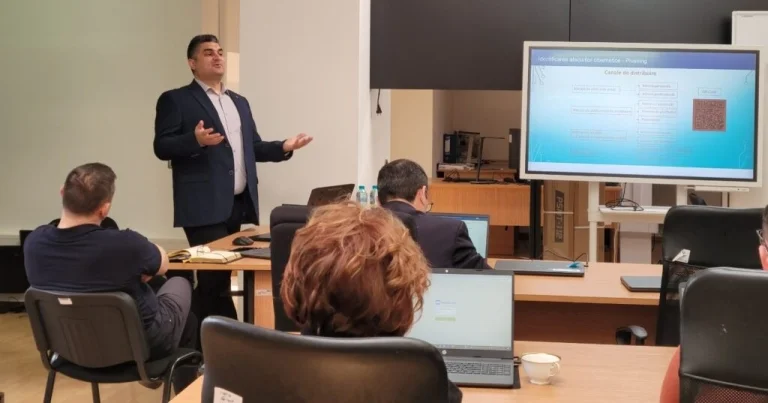
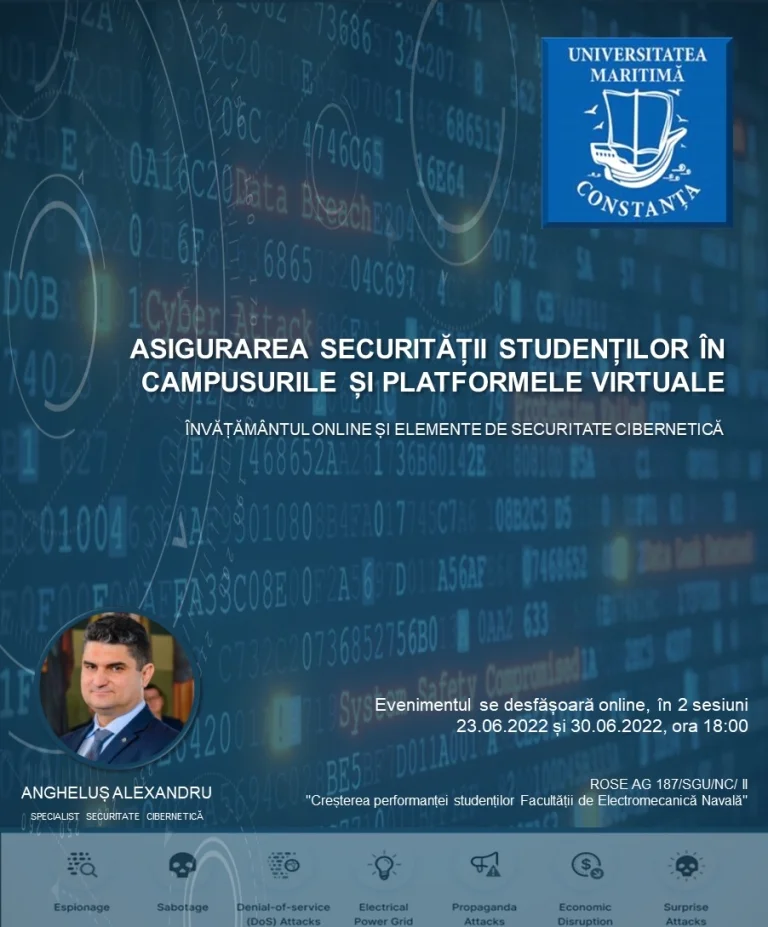
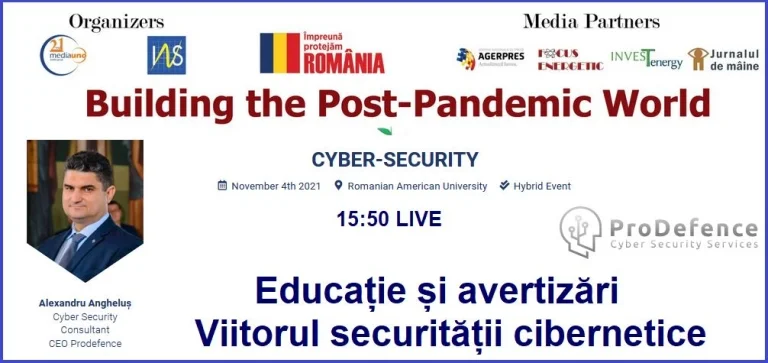
- Courses delivered in the private sector, in public institutions and in universities
- Audience
- Technology users in companies and institutions, at any level of technical background
- NIS2
- Training of staff and management is an explicit requirement, not a recommendation — see the NIS2 compliance engagement
Courses delivered
Sessions held in companies, public institutions and universities, alongside our own cyber education projects.
Frequently asked questions
01Is training the IT team enough?
No. NIS2 requires the training of staff and of management bodies. In practice, the IT team is not the target of most social engineering — the people targeted are those who approve payments, handle contracts or hold access to data, whatever their department.
02How long does a programme take?
It depends on the audience and the number of participants. A basic staff module can be delivered in a single session; programmes that include assessment, a separate management module and periodic refreshers are planned over a longer period, against a schedule agreed at the start.
03Do we get evidence of training for the compliance file?
Yes. We provide attendance and completion records in a form usable in your compliance file and in dealings with an auditor or the competent authority.
04Can courses be delivered online?
Yes — on site, online in live sessions, or self-paced through the CysEdu platform. For organisations with several locations, combining one live session with self-paced modules is usually the most practical arrangement.
05How often should training be repeated?
Attack techniques change, and so do the people. An annual cadence, plus a session for new joiners, is a reasonable starting point for most organisations.
Tell us the audience and the size. We will propose a format and a syllabus.
Start protecting the organisation at the point attackers actually aim for — the people. The initial conversation costs nothing.
- Phone
- +40 763 204 739
- [email protected]
- Response time
- One working day at most