AI voice cloning scams: how to spot the “your child is calling” call and protect your family
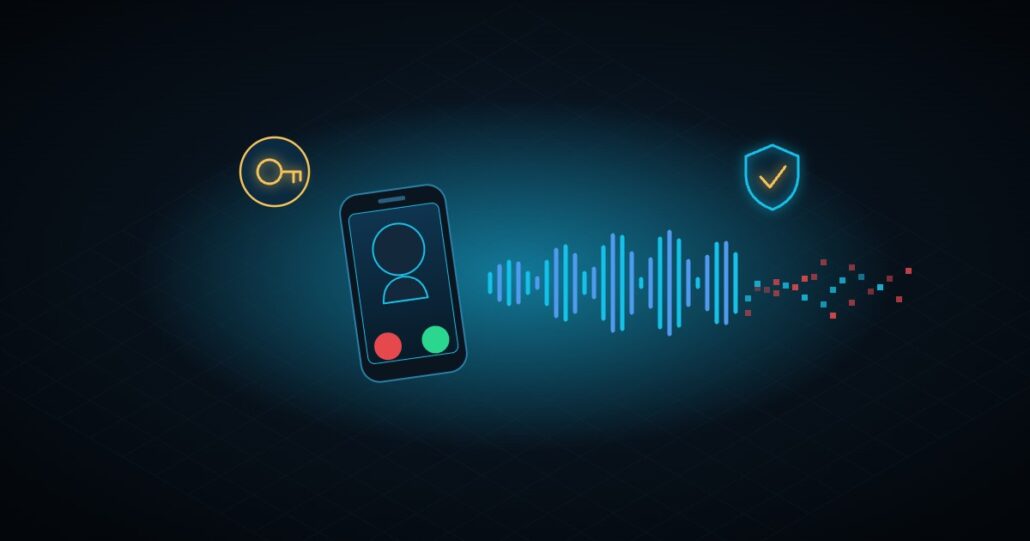
A voice cloning scam uses artificial intelligence to imitate a relative who sounds panicked and asks for money urgently. The best defence is simple: hang up, call the person back on the number you know and ask for the family safe word you agreed in advance. Without both checks, send nothing.
Key points
- In February 2026 the Romanian Police warned about the “your child is calling” fraud: a family member’s voice cloned with AI from recordings posted online.
- DNSC’s 2025 annual report shows fraud up 91% and flags deepfakes of public figures’ voices and faces used to push fake investments.
- A family safe word known only to you breaks the scammer’s script within seconds.
- Urgency, secrecy and unusual payment methods (crypto, courier, transfer to a stranger) are the three classic signs.
- If you already paid, call your bank at once, keep every piece of evidence and report it to the police.
How the scam works
Speech synthesis tools can reproduce a person’s tone, rhythm and intonation from audio recordings. The material is often what we publish ourselves: social media clips, voice notes, live streams, interviews.
A typical script has four steps:
- Collection: the scammer finds recordings of a young person’s voice plus family details (names, town, school, parents’ workplaces), often from public profiles.
- Pretext: a car accident, an arrest, a lost phone, a medical emergency.
- The call: a near-identical voice says a few short sentences, cries or speaks in fragments, then “hands the phone” to a supposed police officer, lawyer or doctor.
- Payment: money must be sent now, often by courier, transfer to an unknown person or crypto, “so nobody finds out”.
The same mechanism appears in ads with public figures. On 18 February 2026 the National Bank of Romania warned that deepfake posts showing its governor, Mugur Isărescu, were being used for fake investment offers.
The most common warning signs
| Sign | What it means |
|---|---|
| Extreme urgency, “right now, in five minutes” | You are denied time to check. That is the goal. |
| A request for secrecy: “don’t tell Dad” | Isolating you prevents a second, checking call. |
| The voice says little, then someone else takes over | The clone is used only for a few convincing lines. |
| Unknown or hidden number | The real person has their own number. Call it. |
| Payment by courier, crypto or to a stranger | No authority collects bail or fines that way. |
| Vague answers to personal questions | The clone does not know shared memories. |
| “Dramatic” background noise | Sirens, crying, street noise added for pressure. |
No single sign is proof. Urgency, secrecy and an odd payment method together are reason enough to stop the conversation.
The family safe word: the cheapest protection there is
The Romanian Police recommend a “family password” and a check call to the known number. Here is how to set one up properly.
Choosing it
- A short word or phrase, easy to recall under stress but impossible to guess from your public profiles.
- No pet names, birthdays, favourite teams or home towns: they are all online.
- Agree on it face to face, not by message or email.
- Include grandparents and children old enough to understand.
Using it
One rule: any phone request for money or data made in the family’s name is confirmed with the safe word. If the caller does not know it or “forgot it in the panic”, hang up and call the person on their usual number. Change the word if you think someone else heard it, or after using it in a real situation.
What to do during a suspicious call
- Don’t confirm details. Do not say the name of the person who “should” be calling. Let the caller identify themselves.
- Ask a control question. The safe word or a memory only you share.
- Hang up. A real emergency survives a one-minute check call.
- Call the person on the known number. If they don’t answer, call someone near them: a partner, colleague or teacher.
- Contact the institution named. If police or a hospital is mentioned, look up the official number yourself.
- Write it all down. Time, caller number, what was asked, names used.
I’ve already sent the money. What now?
Speed matters. Recovery cannot be promised, but every hour lowers the odds.
- Call your bank immediately on the number on your card or in the app. Ask for blocking and, if possible, a payment recall.
- If you paid in crypto, record the wallet address, time and amount, and contact the exchange you used.
- Keep the evidence: call history, screenshots of messages, receipts, courier details, any recordings. Do not delete them and do not reply to the scammer.
- Report to the police and file a complaint with all the evidence.
- Warn the family, so the scammer does not try again with someone else.
- Change passwords if you shared any login details.
Where the amount is large or accounts were also compromised, a technical analysis of the messages, numbers and payment routes can document the facts in a form useful for a criminal complaint.
Reducing how much of your voice is online
You do not need to vanish from the internet. A few settings reduce the material available for cloning:
- Set children’s profiles to private and review who can see clips with their voice.
- Avoid long voice notes to large or unknown groups.
- Do not publish voices, full names, school and phone numbers of family members together.
- Use a neutral voicemail greeting without names or details.
- Talk to elderly parents: they are a favourite target, and a ten-minute conversation can prevent a large loss.
Why it works: manipulating perception
A cloned voice fools the emotions more than the ear. Fear for a child suspends rational checking at exactly the moment it is needed. The mechanism is analysed in the guide “Artificial Intelligence & The Manipulation of Human Perception” (Mircea Constantin Șcheau and Alexandru-Ciprian Angheluș, 2025), produced with institutional support from DNSC, the Romanian Police, Cyberint and CSA Romania, available at cyberaid.eu/ADA.
The effective answer is a habit, not a technology: a short pause, a control question, a call back.
How ProDefence can help
- CysEdu offers courses, interactive guides and hands-on simulations for individuals and families, under the campaign “Analizează. Decide. Acționează.” (Analyse. Decide. Act.). Practising on fraud scenarios beats reading a list of rules once.
- For suspicious messages, links or files received alongside the call, our malware and fraud analysis service establishes what they are and what risk they pose.
- Where fraud has happened, cybercrime investigation documents the facts technically. Our role is technical: to establish what happened and document the evidence. Whether to report to the authorities is your decision.
- For risks that concern children directly, see child online protection.
To practise before a real call happens, CysGame (in Romanian) offers free interactive quizzes and missions on phishing and data protection, easy to go through as a family, grandparents included.
Frequently asked questions
How easy is it to clone someone’s voice?
Current speech synthesis tools can imitate a person’s tone and intonation from recordings posted online, such as clips or voice notes. Quality varies, but in a short, emotional call with background noise, differences are hard to notice. That is why verification should never rely on your ear.
What is a family safe word?
It is a word or phrase agreed face to face among family members, which you ask for whenever someone requests money urgently by phone. The Romanian Police recommended it in its February 2026 warning about “your child is calling” scams. It must not be guessable from public profiles.
Can I tell from the voice that it is a clone?
Sometimes: unnatural pauses, flat intonation, vague answers to personal questions. Do not rely on it. The safe rule is procedural: hang up, call the person on the known number, then ask for the safe word.
I sent money to a scammer. Can I get it back?
There is no guarantee. The odds improve if you call your bank straight away, ask for blocking and a payment recall, keep all evidence and report to the police without delay. Courier and crypto payments are harder to trace.
How do I protect my parents or grandparents?
Agree on the safe word together, explain the typical script and repeat the rule: no payment requested by phone without a check call. Write your correct numbers on paper next to their phone. A simulation you run with their consent helps fix the habit.
Does the AI Act help against these scams?
From 2 August 2026 the AI Act imposes transparency duties for generated content and deepfakes. Criminals do not follow labelling rules, so the practical protection remains independent verification of any urgent request.
Sources
- Romanian Police, warning on “your child is calling” cloned-voice frauds, February 2026
- National Bank of Romania, warning on deepfake posts featuring the BNR governor, 18 February 2026
- DNSC, 2025 Annual Activity Report (August 2026)
- Regulation (EU) 2024/1689 on artificial intelligence (AI Act), Article 50
- M. C. Șcheau, A.-C. Angheluș, “Artificial Intelligence & The Manipulation of Human Perception” (2025), cyberaid.eu/ADA
Alexandru Angheluș, ProDefence. Co-author of the guide “Artificial Intelligence & The Manipulation of Human Perception”; works on online fraud analysis and cybersecurity education.
