The criminal relevance of artifacts identified in cybercrime investigations (FOSIDHUS 2024)

Conference report, May 2024.
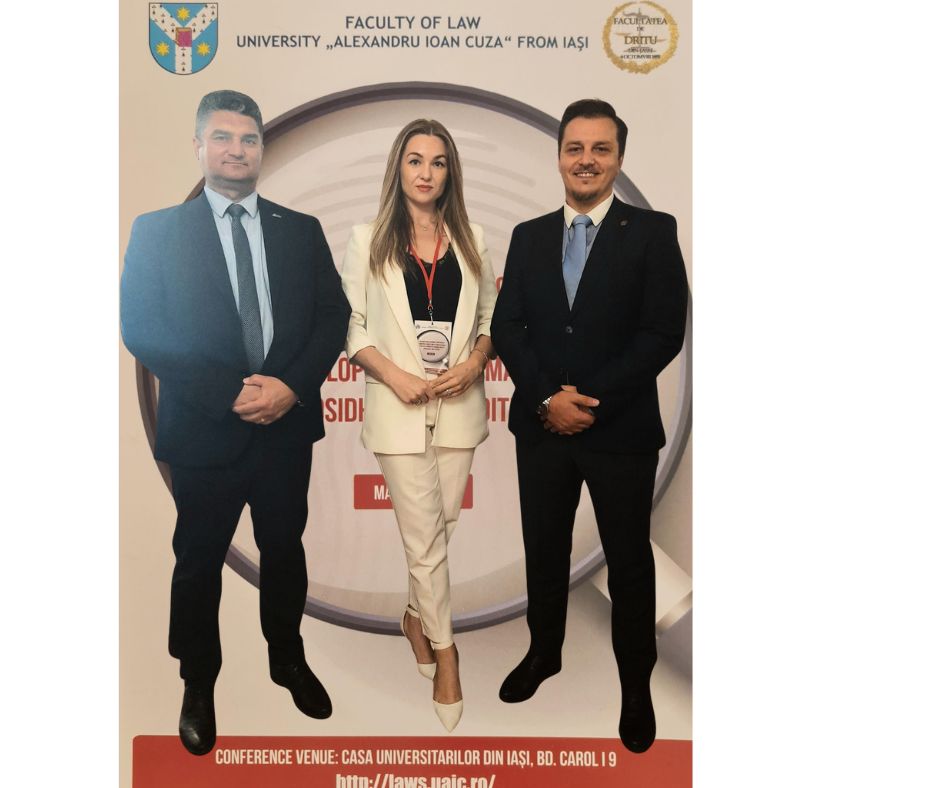
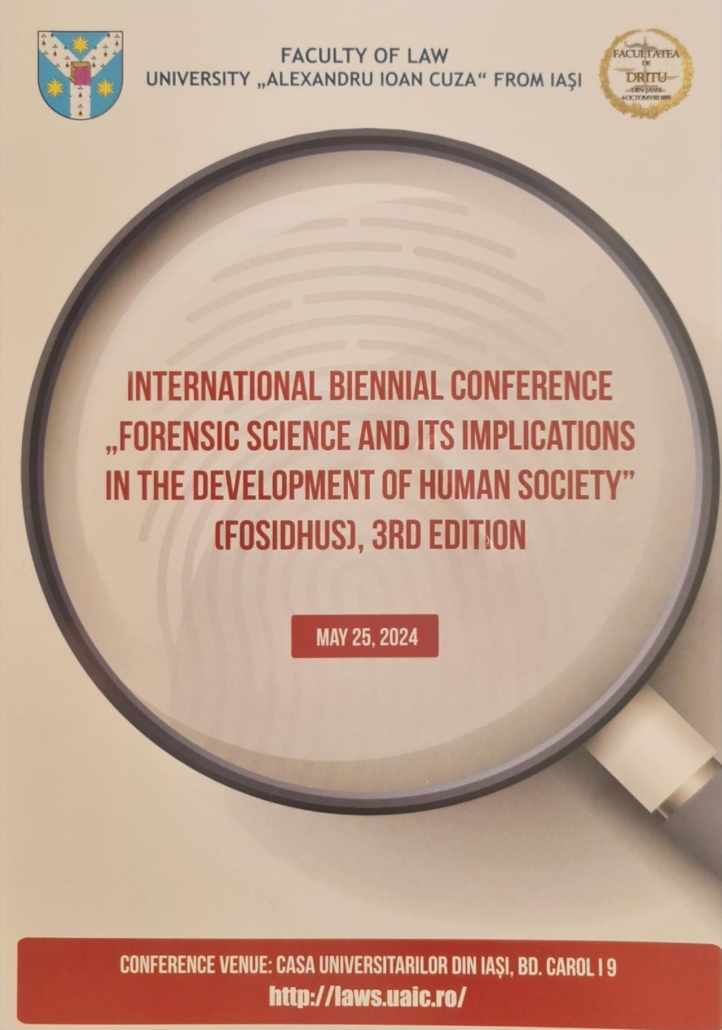
On 25 May 2024, ProDefence presented the paper “The criminal relevance of artifacts identified in cybercrime investigations” at the third edition of the international conference Forensic Science and its Implications in the Development of Human Society (FOSIDHUS), held at Casa Universitarilor in Iași and organised by the Faculty of Law of “Alexandru Ioan Cuza” University. The 2024 theme was “The challenges of forensic science in the digital age”.
Key points
- Digital artifacts are traces left by users and programs: logs, browser history, registry entries, metadata, messages.
- An artifact matters in a criminal case only if it can be linked to a person, an action and a moment in time.
- The paper, co-presented with Florin Zaborilă, discussed how such traces are identified, interpreted and used in criminal proceedings.
- Practitioners bring real cases and tools that complement academic research.
What the paper covered
Alexandru Angheluș and Florin Zaborilă discussed the importance of digital artifacts in criminal investigations and their impact on procedure. In practice, a single trace rarely proves anything on its own. Its value comes from:
- integrity: showing that the trace was collected without being altered;
- context: correlating it with other artifacts, such as timestamps, accounts and network data;
- attribution: linking the activity to a specific device and, where possible, a specific person;
- interpretation: explaining what the trace means in terms that lawyers and courts can assess.

Why practitioner contributions matter
Presentations by private-sector specialists at academic conferences such as FOSIDHUS add value in several ways:
- Real-world experience: practitioners deal daily with new technologies and concrete cases, bridging theory and practice.
- Techniques and tools: methods tested in real investigations reach the academic and professional community faster.
- Collaboration: conferences connect the private sector with universities and public institutions.
- Better practice and policy: field experience reveals gaps in current approaches and suggests improvements.
- Professional development: participants learn current trends and build networks.
- Research: new case studies open new research directions.
Acknowledgements
Special thanks to the organisers, especially Mrs. Ancuța Elena Frantz, and to the National Institute of Forensic Expertise, represented by Mr. Gabriel Dumitru Păduraru, for organisational support. Thanks to all participants for the discussions and exchange of ideas.
Related
ProDefence provides technical analysis in cybercrime cases and analysis of large case files and digital evidence. See also Cybercrime investigation in Romania.

