Artificial intelligence and national security: what has changed and what we can do
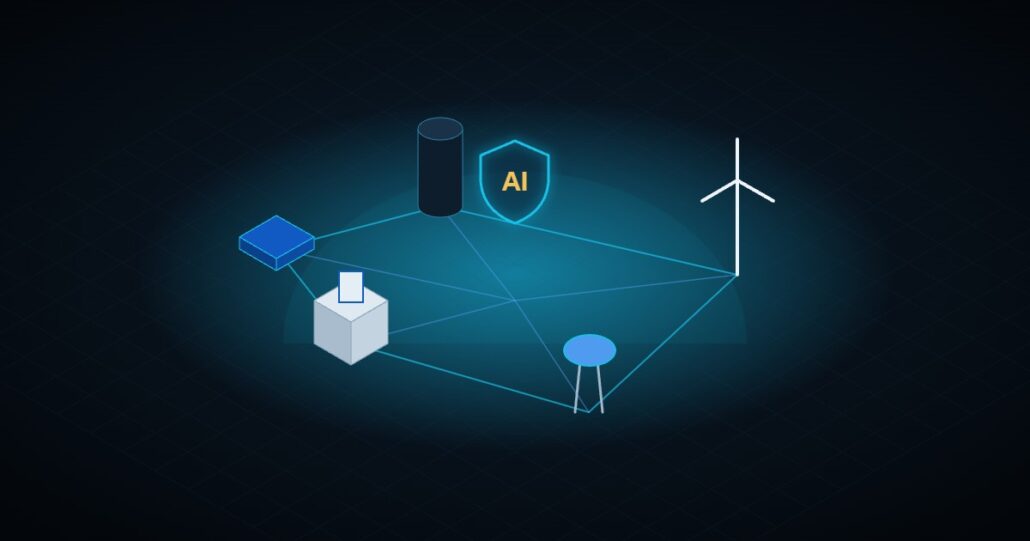
Artificial intelligence affects national security in three ways: it makes information manipulation cheap and hard to detect, it automates cyberattacks against critical infrastructure, and it creates dependence on models and providers the state does not control. Defence no longer rests with institutions alone; it also depends on how well citizens and companies verify information.
Key points
- The DNSC (Romania’s National Cyber Security Directorate) 2025 annual report shows ransomware up 153% with 256 victims, including Electrica, Complexul Energetic Oltenia and Romanian Waters.
- DNSC reports deepfakes of public figures and journalists, used to lure victims to fake investment platforms.
- ENISA estimates that by early 2025 AI-supported phishing accounted for more than 80% of observed social engineering activity.
- In December 2024, Romania’s Constitutional Court annulled the first round of the presidential election after declassified Supreme Defence Council documents described an influence campaign on social media.
- From 2 August 2026, the EU AI Act requires labelling of AI-generated content and deepfakes (Article 50).
What does “national security” mean in the age of AI?
National security is no longer only about defence and intelligence. It includes the continuity of essential services (energy, water, health, transport), the integrity of democratic processes, trust in institutions and the population’s ability to tell real information from fabricated content.
AI touches every one of these layers at once. It is not a new weapon in the classic sense but a multiplier: it lowers cost, increases speed and extends the scale of activities that already existed. A flawless fake message in the local language, a cloned voice, quickly adapted malicious code, a network of coordinated accounts: all were possible before, but they required people, time and money. Today they require far less.
How is AI changing influence operations?
Fabricated content at scale
Generative models produce convincing text, images, audio and video in seconds. An influence operation can test hundreds of variants of a message and keep the ones that spread. Deepfakes do not need to be perfect; they only need to travel fast enough that the correction arrives too late.
Romania already has concrete examples. In February 2026 the National Bank of Romania issued a public warning about deepfake posts featuring its governor, Mugur Isărescu, used to promote fake investments. DNSC’s 2025 report describes the same pattern applied to other public figures and well-known journalists. Financial fraud and disinformation now share the same toolkit.
Democratic processes
On 6 December 2024, the Constitutional Court annulled the first round of Romania’s presidential election after the declassification of Supreme Defence Council documents about an influence campaign run on social media, mainly TikTok. In October 2026 the European Commission opened an investigation into TikTok. Whatever one’s political reading, the case shows that algorithmic amplification and coordinated accounts can become a matter of state security.
Erosion of trust
The most lasting effect is not any single lie but fatigue. When people know any recording might be fake, they start doubting real ones too. The guide “Artificial Intelligence & The Manipulation of Human Perception”, by Mircea Constantin Șcheau and Alexandru-Ciprian Angheluș, produced with institutional support from DNSC, the Romanian Police, Cyberint and CSA Romania, describes how perception is influenced and how it can be defended.
Why is critical infrastructure more exposed?
Critical infrastructure runs on a mix of old and new interconnected systems, often managed by small teams. AI helps attackers find vulnerabilities faster, write personalised phishing and adapt their tools.
DNSC’s 2025 figures show the direction of travel:
| Indicator (DNSC 2025 report) | Value |
|---|---|
| Ransomware incidents vs 2024 | +153% |
| Ransomware victims | 256 (22 public institutions, 119 companies, 115 individuals) |
| Phishing | 4,975 incidents (+70.6%), the main attack vector |
| Account compromise | 1,125 (up from 248 in 2024) |
| Fraud and attempted fraud | 3,937 (+91%) |
Named victims include Electrica, Complexul Energetic Oltenia, Romanian Waters (Apele Române), blood transfusion centres in Maramureș and Craiova, and the Tohan plant of the state arms group ROMARM. At Romanian Waters, around 1,000 systems were compromised in December 2025 and the attackers used BitLocker, a legitimate Windows feature, to encrypt data. Operational technology was not affected, which shows the value of separating office networks from the systems that control physical processes.
Not every one of these attacks involved AI. The link is different: the ransomware-as-a-service model, dominant according to DNSC, and AI tooling both lower the barrier to entry. More attackers can do more, faster.
Technological dependence is a security issue too
A state that relies on AI models developed and hosted elsewhere depends on decisions made in other jurisdictions: access, pricing, usage rules, where the data goes. The debate sharpened after the US executive order on “Super Intelligence” in September 2026, analysed on this site.
The book “Artificial Intelligence and Civilizational Transformation” (Alexandru-Ciprian Angheluș, 2026, DOI 10.5281/zenodo.22159342) covers AI governance and geopolitics and introduces the concept of the cognitively assisted Earth: a world in which individual and organisational decisions increasingly pass through an AI system. For national security, the practical question is who controls this mediation layer and what happens when it fails or is manipulated.
What legal framework applies?
- EU AI Act (Regulation 2024/1689). Prohibitions and the AI literacy obligation (Article 4) apply from 2 February 2025. Article 50 on transparency and labelling of generated content and deepfakes applies from 2 August 2026; generative systems already on the market have until 2 December 2026. High-risk systems listed in Annex III fall under obligations from 2 December 2027.
- NIS2 in Romania (GEO 155/2024). Essential and important entities, including energy, water, health and transport, must apply risk management measures approved by their management bodies (Article 14) and assess their maturity annually (Article 12). AI-driven risks belong in those assessments.
- Romanian Criminal Code. Illegal access (Article 360), disruption of computer systems (Article 363) and computer fraud (Article 249) remain offences whether or not the attacker used AI.
What can states, companies and citizens do?
Public institutions
- Treat information manipulation as an operational risk, with verification and rapid communication procedures.
- Separate IT from operational networks and run regular recovery exercises.
- Set clear rules on which data may enter external AI tools.
- Train leadership, which GEO 155/2024 explicitly requires for covered entities.
Companies
- Include deepfake fraud and AI-generated phishing in the NIS2 risk analysis.
- Require second-channel confirmation for payments and bank detail changes.
- Inventory the AI tools employees use and adopt a usage policy.
- Test internet-facing systems regularly.
Citizens
- Check the source before sharing: who published first and where.
- Be suspicious of messages demanding urgency, money or data, even if they seem to come from someone you know.
- Agree a “family password” for unexpected calls asking for money.
- Learn through practice, not just warnings.
Cognitive resilience: the missing layer
Deepfake detection technology helps, but it is always one step behind. The layer that cannot be bought is the habit of verifying. The Humanᴬᴵ and Orgᴬᴵ framework, published by ProDefence in 2026 (DOI 10.5281/zenodo.22295278), describes the relationship between people, organisations and AI in terms of mediated and governed capacity: AI amplifies good judgement, but it amplifies unverified mistakes just as efficiently.
For a country, cognitive resilience means enough people asking the same few questions before believing or sharing: who is saying this, how do they know, and who gains if I react now.
How ProDefence can help
ProDefence works where cybersecurity, research and education meet:
- Public research: the work on AI, civilizational transformation and the Humanᴬᴵ and Orgᴬᴵ framework is available on the research page.
- CysAI (cysai.eu): an AI security intelligence platform with a catalogue of AI agents and risk profiles, a global AI regulation tracker and threat research.
- CysEdu (cysedu.eu): practical education for individuals and families, under the campaign “Analyse. Decide. Act.” (“Analizează. Decide. Acționează.”).
- NIS2 organisations: consulting, audit (members of the ProDefence team are DNSC-attested NIS auditors) and cybersecurity services that bring AI risks into the risk analysis.
- Training: cybersecurity training for teams and leadership.
On the information environment side, CysFact NEXUS supports narrative analysis and coordinated response to influence campaigns, and is designed for analysis and decision-making teams.
Frequently asked questions
How does artificial intelligence threaten national security?
In three main ways: it produces convincing fake content at scale for influence operations and fraud; it helps attackers automate and personalise cyberattacks, including against critical infrastructure; and it creates dependence on models and providers controlled from outside the country. None of this is entirely new, but AI makes it cheaper and faster.
Have deepfakes been used in Romania?
Yes. In February 2026 the National Bank of Romania publicly warned about deepfake posts featuring its governor, Mugur Isărescu, used for fake investments. DNSC’s 2025 report describes deepfakes using the voices and faces of public figures and journalists to lure victims to fake investment platforms.
What does the AI Act require for deepfakes?
Article 50 of the AI Act imposes transparency: content generated or manipulated with AI must be labelled and deepfakes must be disclosed as such. The obligations apply from 2 August 2026, and generative systems already on the market have until 2 December 2026. Labelling does not stop attackers, but it binds legitimate providers.
How does NIS2 relate to AI risks?
Romania’s GEO 155/2024 requires essential and important entities to manage cybersecurity risk with measures approved by management and an annual maturity self-assessment. AI-generated phishing, cloned-voice fraud and uncontrolled use of AI tools by employees are risks that belong in that analysis.
What can an ordinary citizen do?
Check the source before sharing, treat any message demanding urgency, money or data with suspicion, agree a family password for unexpected calls, and learn in practice what manipulation looks like. A country’s resilience is built from these small habits repeated by many people.
Sources
- DNSC, 2025 Annual Activity Report (published August 2026), statistici.dnsc.ro
- Romanian Waters (Apele Române), press release of 21.12.2025, Agerpres
- ENISA, “Threat Landscape 2025”, enisa.europa.eu
- Regulation (EU) 2024/1689 (AI Act), EUR-Lex
- GEO 155/2024, consolidated text, legislatie.just.ro
- Alexandru-Ciprian Angheluș, “Artificial Intelligence and Civilizational Transformation” (2026), DOI 10.5281/zenodo.22159342
- Mircea Constantin Șcheau, Alexandru-Ciprian Angheluș, “Artificial Intelligence & The Manipulation of Human Perception” (2025), cyberaid.eu/ADA
Alexandru Angheluș, ProDefence. Cybersecurity specialist and author of “Artificial Intelligence and Civilizational Transformation”, accepted into the European Commission’s Apply AI Alliance.
