Perceptual sovereignty is the ability of individuals and societies to form their own beliefs, emotions and decisions without being steered by invisible, automated influence. In today’s digital ecosystem, behavioural profiling, disinformation and psychological manipulation no longer act separately: they work together as one system that shapes perception at scale. Regaining autonomy requires education, critical skills, trusted information networks and collective lucidity, not a single tool or law.

Key points

  • Control over perception has become one of the most valuable strategic resources, alongside infrastructure and capital.
  • Profiling, disinformation and manipulation merge into an automated, algorithmic mechanism aimed at predictable behaviour.
  • The question is no longer whether we are influenced, but how, by whom and for what purpose.
  • Five lines of action can rebuild individual and collective resistance.
  • Inaction is not neutral: it hands the information space to actors with interests opposed to the common good.

Perception as a strategic resource

In the information age, the ability to shape what people believe, feel and think has become an essential tool of influence, used in politics as well as in the economic, social and ideological spheres.

Paradoxically, this happens in a digital ecosystem that presents itself as free and democratising, promising equal access to information and freedom of expression. In reality, we are witnessing a sophisticated colonisation of mental space: attention is fragmented, emotions are captured and beliefs are directed, not by force, but through a subtle, integrated and permanent process.

Illustration on perception control in a technologically engineered reality

One system, three mechanisms

Behavioural profiling, disinformation and psychological manipulation now merge into a single automated and algorithmic mechanism, calibrated for precise goals: from commercial conversions to steering political decisions or radicalising public opinion. Activated together, they create an information flow that looks spontaneous but is built strategically to produce predictable behaviour.

This is not a future scenario. The way personal decisions are influenced, public opinion is shaped and mass behaviour is directed shows that psychological and informational control has become part of the global digital architecture. Often it operates without the informed consent of the people targeted, and without them being aware of it.

How do we regain our autonomy?

No application, platform or law can on its own stop the deep, systemic dynamics of digital manipulation. What is needed is an integrated and sustained strategy along several lines of action.

1. Understand the logic of manipulation

The first step is to decode the mechanisms of influence. Generic advice such as “don’t believe everything you read” is not enough. People need to understand how personal data is collected, analysed and used, how persuasive messages are designed and how behaviour is shaped by algorithmic or emotional stimuli. This understanding gives individuals control over their own attention, opinions and reactions.

2. Rebuild critical reflexes

Critical thinking is not mere suspicion. It is the ability to analyse the intention, context, structure and motivation behind a piece of information. It does not develop naturally, but through continuous training, guided exposure to examples of manipulation and the use of semantic, logical and discourse analysis tools.

3. Treat digital education as strategic infrastructure

Digital literacy is no longer a luxury but a condition for cognitive survival. It should be treated as national security infrastructure: just as we protect physical borders, we must protect mental ones. A digitally educated society is harder to manipulate and more resilient to disinformation campaigns.

4. Build networks of trust and validation

When truth is relativised and factual consensus erodes, trust becomes strategic. Validation networks of journalists, researchers, independent specialists and credible institutions can provide clear reference points and counter toxic narratives in real time. Without them, public space fragments and people become trapped in incompatible information bubbles.

5. Practise collective lucidity

Manipulation works best in isolated, vulnerable or radicalised groups, where dialogue stops and thinking becomes tribal. Authentic dialogue, pluralism of ideas, a culture of debate and civic empathy are real forms of collective immunity. Lucidity is not only an individual trait but a social resource that must be practised and maintained.

Regaining autonomy is therefore an ongoing educational, civic and cultural process, in which individuals, communities and the state each have a role.

What do we risk if we do not act?

Without educational, cultural and institutional intervention, the main risk is the gradual loss of mental and social autonomy. Manipulation becomes invisible and routine, and influencing perception becomes the norm rather than the exception. Control works not through coercion but through continuous shaping of people’s cognitive and emotional framework, until they adopt beliefs, emotions and decisions that are not authentically theirs, yet feel as if they were.

At individual level

  • Loss of cognitive autonomy: difficulty distinguishing one’s own thoughts from suggestions implanted from outside;
  • Radicalisation and polarisation: lack of exposure to different opinions favours rigid, extreme beliefs;
  • Information stress: contradictory stimuli generate confusion, anxiety and mental exhaustion;
  • Social alienation: disconnection from a shared reality isolates people and damages relationships.

At societal level

  • Extreme polarisation of public discourse into incompatible ideological bubbles;
  • Crises of trust in institutions, the press and authorities, and between social groups and generations;
  • Democratic instability: elections and policies can be hijacked through disguised informational influence;
  • Greater exposure to information warfare, where manipulation is used to destabilise states and weaken internal cohesion.

Not reacting means ceding the information space. The longer action through education, regulation, dialogue and solidarity is delayed, the harder it becomes to rebuild society’s autonomy and coherence.

Final thoughts

Profiling, disinformation and psychological manipulation now function as a coordinated system designed to influence perception, behaviour and collective decisions, often without the awareness or consent of those affected. The challenge is no longer only protecting personal data or questioning sources, but reclaiming cognitive autonomy in a reality increasingly shaped by invisible strategic forces.

There is no single solution. What is needed is a systemic response grounded in digital education, critical awareness and resilient networks of trust. In a world where truth can be cloned, distorted or overwritten, lucidity and digital literacy are essential forms of defence.
Further reading

Published in April 2024.

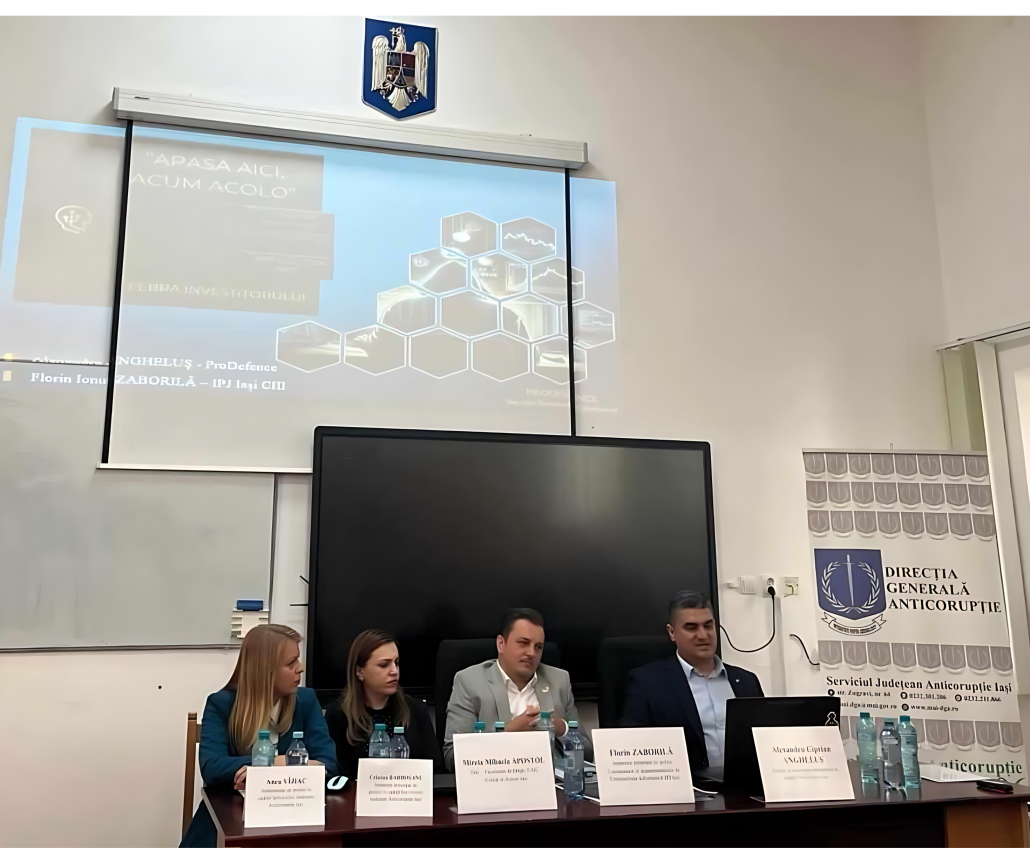
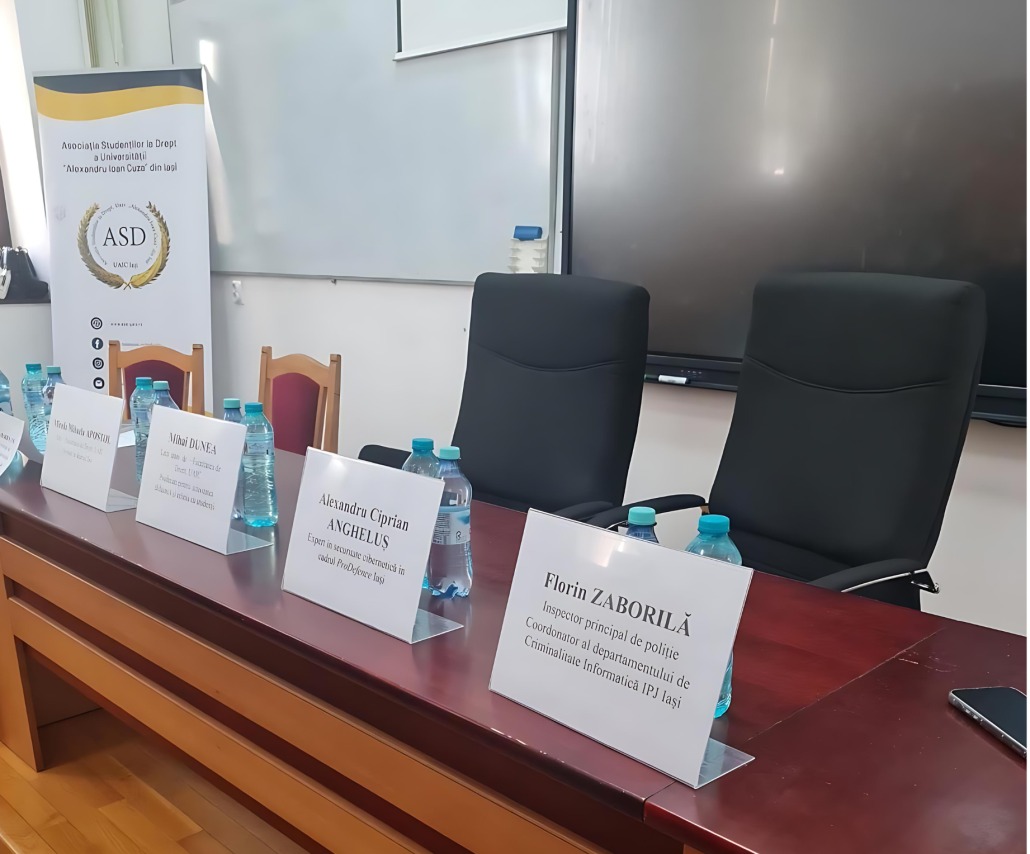
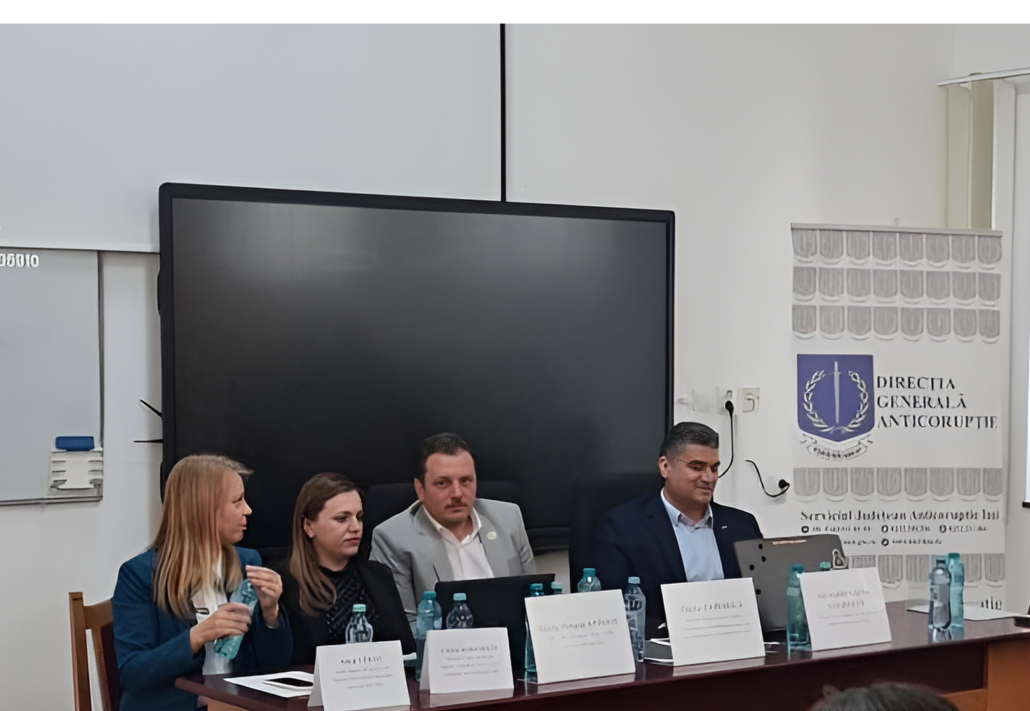
At Master’s Week, organised by the Law Students Association of Iași at “Alexandru Ioan Cuza” University, ProDefence presented master’s students with part of the work of cybercrime investigators. The main message: an online fraud case is solved only when the technical and legal sides are handled together.

Key points

  • Students were interested in real cases, victims, the amounts involved and the profile of perpetrators.
  • A cybercrime investigation has clear stages, and each produces information a lawyer needs.
  • The DGA team, Iași County Anticorruption Service, gave a complementary presentation.
  • The financial fraud trends discussed are covered in Trends in online financial fraud.

How a cybercrime investigation unfolds

For a future lawyer, the most useful thing is to understand the path of a case:

  1. The complaint: the victim alerts the bank and the police; timing matters because funds move fast.
  2. Preserving data: messages, screenshots, bank statements, providers’ access logs.
  3. Technical analysis: IP addresses, domains, accounts, cryptocurrency wallets, malicious files.
  4. Correlation: linking technical traces to people, accounts and specific moments.
  5. Use in the case file: presenting findings in a form that prosecutors, lawyers and the court can assess.

Each stage raises legal questions: which data can be obtained and from whom, how its integrity is preserved, what value evidence obtained from other countries has.

Institutional cooperation

On the same occasion, the team of the General Anticorruption Directorate (DGA), Iași County Anticorruption Service, gave a presentation with very useful information. Thanks to Chief Police Inspector Florin Ionuț Zaborilă, coordinator of the Cybercrime Investigation Department of the Iași County Police, for his ongoing collaboration and for warning the public about online dangers. Thanks to the organisers and to “Alexandru Ioan Cuza” University of Iași for the invitation.

For lawyers and victims

ProDefence offers technical analysis in cybercrime cases, electronic fraud analysis and, through ProCIS, case file analysis.

A cyber education course teaches you to recognise online threats and protect yourself against them: passwords and authentication, phishing and fraud, safe browsing, phone and computer security. Most incidents affecting individuals and small businesses start with a human mistake, and education prevents that more cheaply than any technology.

Key points

  • Many users are unaware of cyber threats and of how to protect themselves.
  • A good course covers five topics: online identity, electronic fraud, safe browsing, device security and keeping knowledge up to date.
  • Training must be repeated, because attackers’ methods keep changing.

Why cyber education is needed

Safe browsing and protecting personal data are now basic skills, like knowing the rules of the road. Yet many people use the internet, banking apps and social media every day without knowing what a fraud attempt looks like. Cyber education courses provide the information and practice needed to stay safe online.

What a course should cover

1. Protecting your online identity

Strong, unique passwords for every account, a password manager, two-factor authentication and recognising the phishing techniques criminals use to steal personal data.

2. Preventing electronic fraud

How to protect cards and bank accounts, recognise an unsafe website or an offer that is too good to be true, and what to do immediately if you have been tricked.

3. Safe browsing

How to avoid infected websites, which permissions to give apps and how to protect personal data while browsing.

4. Device security

Phones and laptops are frequent targets. A good course explains updates, protection against malware, screen locking and what to do if a device is lost.

5. Keeping knowledge up to date

Technology evolves and attack methods change: today that includes AI-cloned voices and deepfakes. Cyber education is an ongoing process, not a one-off course.

How to choose a course

  • look for real examples and exercises, not just theory;
  • check that it is adapted to its audience: children, parents, seniors, employees, managers;
  • prefer courses that end with a test or a simulation;
  • choose a provider that updates content regularly.

ProDefence courses

ProDefence delivers cybersecurity training for organisations, schools and institutions, and offers online courses with certificates through the CysEdu platform. The Cyber AID programme provides free guides for the general public.

Frequently asked questions

What do you learn in a cyber education course?

How to protect accounts and online identity, recognise phishing and fraud, browse safely and secure phones and computers.

Who are these courses for?

Anyone who uses the internet: children and parents, seniors, employees and managers, each with content adapted to them.

How often should training be repeated?

At least once a year, with updates when new attack methods appear, such as fraud using cloned voices.

Investing in cyber education is one of the most effective protective measures, for individuals and organisations alike.

Drone cybersecurity treats unmanned aerial vehicles (UAVs) as what they really are: cyber-physical systems that extend an organisation’s attack surface beyond its digital perimeter. A compromised drone can leak data, be hijacked or support a physical intrusion. Counter-drone awareness is the organisational capacity to recognise, document and escalate drone-related risks within legal limits.

Key points

  • Drones combine hardware, navigation, radio and IP links, firmware, mobile apps and cloud back-ends, so they inherit the risks of all of them.
  • Main attack vectors: communications and navigation (interception, jamming, spoofing), firmware and software, data and storage, and the human operator.
  • In hybrid threats, drones serve reconnaissance, cyber-physical attacks and information manipulation.
  • Private organisations focus on detection, documentation and cooperation with authorities; active neutralisation is strictly regulated.

The integration of drones (UAVs – Unmanned Aerial Vehicles) into civilian, commercial and government operational processes is one of the most accelerated technological transitions of the last decade. From inspection and monitoring activities, to critical security, logistics or data collection operations, UAVs have become indispensable tools in many sectors.

However, this rapid adoption has been dominated by considerations of efficiency, cost and technological capability, to the detriment of a systematic assessment of security risks. In many cases, drones are treated as ancillary equipment, without being formally integrated into cybersecurity architecture, risk management processes, or critical infrastructure protection policies.

In reality, drones are complex cyber-physical platforms that extend the attack surface of organizations beyond the traditional digital perimeter. In this context, the development of a structured Drone Cybersecurity & Counter-Drone Awareness approach  is no longer optional, but an essential condition for maintaining security, operational continuity and institutional trust.

Drone cybersecurity as a strategic priority

UAVs as extensions of digital infrastructure

From a functional point of view, a modern drone must be understood as a distributed system, consisting of:

  • specialized hardware components (flight controllers, sensors, propulsion systems);
  • navigation and positioning systems (GNSS, INS, inertial sensors);
  • radio and IP communication channels;
  • firmware and control software;
  • management applications and cloud backends for data processing and storage.

This architecture makes UAVs comparable to critical IoT equipment or connected industrial systems. Any vulnerability exploited at the level of communication, firmware or control interfaces can lead to the compromise of the entire mission and, implicitly, to physical and operational effects.

Convergence of cyber, physical and operational risks

Unlike many classic IT assets, drones generate a direct convergence between cyber and physical risk. A security incident is not limited to data loss or unavailability of a service, but can cause:

  • intrusions into sensitive spaces;
  • affect the safety of staff and the public;
  • disruption of critical infrastructure;
  • severe reputational impact and legal consequences.

This convergence requires a paradigm shift: drone security cannot be treated exclusively as a technical issue, but as an integrated component of organisational and national security.

Common systemic vulnerabilities

The analysis of incidents and current practices highlights a number of recurring vulnerabilities:

  • lack of independent auditing of firmware and software ecosystems;
  • reliance on mobile applications and cloud services with varying levels of security;
  • insecure default configurations and weak authentication mechanisms;
  • the absence of clear policies for the use, monitoring and response to UAV incidents.

These elements create a favourable context for exploitation, both by opportunistic and advanced actors, in coordinated campaigns.

Cyberattack vectors specific to UAV ecosystems

Compromising communications and navigation

The communication channels between the drone, the control station and the backend infrastructure are one of the most exposed points of the system. Attacks can target:

  • interception of traffic for the collection of operational information;
  • injection of unauthorized orders;
  • deliberate degradation of the control link by jamming;
  • manipulation of navigation systems through spoofing techniques.

The consequences are not limited to loss of control, but may include compromising the integrity of the data collected and misleading decision-making processes based on that data.

Software and firmware vulnerabilities

UAV ecosystems are generally based on proprietary software, with little visibility into internal security mechanisms. Risks include:

  • firmware implementation errors;
  • Insufficiently secure management interfaces or APIs
  • update mechanisms vulnerable to supply chain attacks;
  • Uncontrolled integration with third-party apps.

Exploiting these vulnerabilities can allow attackers to achieve persistence, manipulate drone operation, or exfiltrate sensitive data without being detected.

Attacks on data and processing infrastructure

Drones are essentially data collection platforms. Attacks can target:

  • interception of video streams or telemetry;
  • compromise of storage systems;
  • alteration or falsification of the collected data;
  • deleting or modifying flight logs to hide malicious activity.

In sensitive contexts, these attacks can affect investigations, audit processes, or can be used for information manipulation.

Exploitation of the human factor

UAV operators are a critical component of the security chain. Phishing, social engineering, or targeted malware attacks can result in:

  • compromise of control accounts;
  • unauthorized access to associated cloud platforms;
  • manipulation of flight configurations or plans;
  • facilitating subsequent attacks on the organization’s infrastructure.

Drones in hybrid threat architecture

UAVs as reconnaissance and intelligence tools

Within hybrid threats, drones are used to gain a detailed understanding of the target environment: infrastructures, procedures, operational flows and personnel behavior. The information collected can be correlated with OSINT data and other sources to build detailed target profiles.

Integration of drones in cyber-physical attacks

Drones can support or amplify cyberattacks by:

  • identification of vulnerable points of the physical infrastructure;
  • deliberately disrupting systems to create windows of opportunity;
  • synchronizing physical incidents with digital attacks to maximize impact.

This integration makes detecting and attributing attacks considerably more difficult.

The informational and psychological dimension

The visual materials collected with the help of drones can be used to create or sustain manipulative narratives. Even without advanced technical changes, taking images out of context or selectively presenting images can generate confusion, mistrust and public pressure on institutions.

Counter-Drone Awareness: from reaction to institutional capacity

The importance of organizational awareness

The first level of countermeasures is the recognition that drones can pose a risk. This involves:

  • identification of sensitive areas and assets;
  • understanding the types of legitimate UAV activities in proximity;
  • defining the criteria for classifying a UAV incident.

Processes, responsibilities and institutional integration

A mature approach requires clear reporting, analysis and escalation procedures in place, integrated into existing security and business continuity systems. Roles and responsibilities must be explicitly defined and cooperation with competent authorities must be established in advance.

Detection and analysis capabilities

Sensing technologies (RF, radar, acoustics, EO/IR) should be seen as decision-support tools, not as stand-alone solutions. Real value comes from data correlation, contextualization, and integration with cybersecurity and intelligence platforms.

Legal constraints

It is essential for organizations to understand the legal limits of intervention. Active neutralization measures are strictly regulated, and the role of private entities focuses on detection, documentation and institutional cooperation.

Building a Coherent Drone Cybersecurity Strategy

An effective strategy must include:

  • clear governance and internal policies;
  • integration of UAVs in risk and incident management;
  • technical measures proportionate to the level of risk;
  • training and awareness programs;
  • alignment with existing information and operational security frameworks.

This approach ensures not only the reduction of risks, but also the increase of organizational resilience in the face of complex and constantly evolving threats.

Conclusion

Drones are a capability multiplier, but also a risk multiplier. In the absence of a structured approach, they can become critical points of vulnerability in an already complex security landscape.

Drone Cybersecurity & Counter-Drone Awareness should not be seen as separate areas, but as interdependent elements of a modern cyber-physical security architecture. Organizations that invest in understanding, processes, and capabilities today will be significantly better prepared for the operational challenges of the next decade.

How ProDefence can help

ProDefence supports organisations that operate or are exposed to drones with penetration testing of connected systems and applications, risk assessments within NIS2 compliance consulting and cybersecurity training for operators and security teams.

A particular feature of today’s financial fraud is the ability of criminals to adapt quickly to new technologies and trends. In an increasingly connected world, where more and more transactions take place online, criminals have developed the ability to quickly exploit any vulnerability. This includes using social networks to spread fake investment schemes, compromising the security of mobile apps for unauthorised access to bank accounts, and even exploiting emerging technologies such as cryptocurrency and blockchain to devise new types of scams.

Online safety for kids comes down to a few simple rules a child can remember: different, hard-to-guess passwords, no personal information for strangers, no trust in “free” gifts and, whenever something feels strange, asking a trusted adult. This guide explains them in children’s language, through Jamie’s story.

Key points

  • Personal information is a treasure: full name, address, school and passwords are not shared online.
  • Every account needs its own strong password.
  • Not everyone on the internet is friendly, even if they seem to be.
  • “Free” prizes and gifts are often traps called phishing.
  • The golden rule: stop, think, ask an adult.

Video for kids

Meet Jamie

Hey kids! Let’s talk about Jamie, who is a lot like you. Jamie loves games, chatting with friends and exploring the internet. One day, Jamie got an email from a stranger offering a free gift in exchange for some personal details. What do you think Jamie should do? Share their information for a gift?

The secret code of cybersecurity

Cybersecurity is like a secret code that keeps your treasure safe. The treasure is your personal information, and the code locks it away from people who might misuse it.

The power of passwords

Do you have a password for your games or apps? How many of you use the same password for everything? It is easy to remember, but it is like having one key for every door in your house. If someone finds it, they can open everything. That is why every account needs a unique, strong password. A strong password is like a castle with thick walls: the more complex it is, the harder it is to break in.

Strangers online

Imagine you are playing your favourite game and someone asks for your address to send you a game accessory. Is that safe? Just like in real life, not everyone on the internet means well. Telling people where you live or which school you go to can be risky. Some things stay secret online.

Watch out for fake gifts and prizes

Remember Jamie’s email? Offers of free gifts or prizes can sound great, but they are often tricks called phishing, used to steal personal information. When you get a message like that, do not click the links or download anything. The best thing to do is ignore it and tell a trusted adult.

Be a cybersecurity superhero

Cybersecurity sounds complicated, but it is really about smart choices. Just as you would not tell a secret to a stranger, do not share personal information online without thinking. Next time you type a password, share something or are about to click a link, stop and ask yourself: is this safe? If you are not sure, ask a trusted adult.

Are you ready to be a superhero who protects your information from internet villains? Your smart choices help keep the internet fun and safe for everyone.

For parents and teachers

  • watch the video with your child and discuss the opening question: what should Jamie do?
  • agree on a clear rule: no gifts, prizes or new online friends without asking an adult;
  • help your child create a different password for each account and turn on parental controls;
  • tell your child they will not be in trouble for telling you about something strange online.

More resources for families are available on Child online protection.

Frequently asked questions

What information should a child never share online?

Full name, address, school, phone number, passwords and photos that show where they live or study.

How do I explain phishing to a child?

As a trick: someone promises a gift or prize to get secret information. The rule is not to click and to tell an adult.

At what age should we talk about online safety?

As soon as children start using a tablet or phone, with explanations adapted to their age, like Jamie’s story.

For a child, social media and online games are like a new ocean: full of colour and friends, but also hidden dangers. Four rules help children navigate safely: limited time online, no comparing themselves with what they see, kind words and real breaks from the screen. The story of Fin the little fish explains them in children’s language.

Key points

  • Time online should be balanced with school, outdoor play, family and sleep.
  • What we see on social media is not the whole reality; every child is unique.
  • Good manners matter online too: words can hurt.
  • Breaks from the screen are part of healthy internet use.

Video for kids

The digital ocean

Hello, young explorers! Do you know why parents and teachers keep telling you to be careful online? Because the online world is like a vast, magical ocean. It is full of wonder and fun but, like a real ocean, it has hidden dangers. Let’s follow a little fish called Fin and learn how to navigate safely.

Fin’s discovery

Fin was a curious little fish with sparkling eyes who loved to explore. One day he found a new, shiny part of the ocean, full of colourful corals and friendly fish. It was like discovering a new game or a social app. Fin was excited, but he remembered something important: a new place should be explored carefully.

Balancing time

Fin loved the new area, but he knew he could not stay there forever. He had to go home, eat and rest. In the same way, you have homework, playtime with friends and bedtime. Fin teaches us that time online must be balanced with the other important things in life.

Everyone is unique

In the new area, Fin met all kinds of fish: some bigger, some shinier. He realised that he was unique in his own way, and that was wonderful. The same goes for you: do not compare yourself with what you see online. Photos and videos show only part of someone’s life.

The power of kind words

Fin learned to speak kindly to the other sea creatures. He knew that words, like water currents, can be gentle or strong, so he chose gentle ones. Online, this is called good manners. Be kind and polite when you send messages, comment or play games. If someone is mean to you or upsets you, tell an adult.

The joy of disconnecting

Fin was wise. He knew that too much time in that new place could be overwhelming, so he took breaks and spent time with family and friends. It is good for us to do the same: play outside, read and spend time with the people we love.

What we learn from Fin

  • set time limits for the internet;
  • celebrate being unique;
  • be kind online;
  • take breaks and enjoy the world around us.

The internet is a great place to learn and play, as long as we explore it with care. Be like Fin: smart, kind and careful.

For parents

  • agree on screen-time rules with your child, including no phone before bedtime;
  • use the privacy settings and parental controls of the apps;
  • talk about how images on social media are often selected or edited;
  • encourage your child to tell you if they are insulted, bullied or contacted by strangers.

More resources are available on Child online protection. For schools and groups, ProDefence delivers cybersecurity training.

Frequently asked questions

How much time can a child spend on social media?

There is no single number for everyone; what matters is that time online does not replace sleep, school, exercise and family time, and that the rules are agreed together.

What should I do if my child is bullied online?

Keep screenshots, block and report the account in the app, talk calmly with your child and, if it continues, ask the school or the authorities for support.

Cybersecurity education is the first line of defence, because most successful attacks exploit people, not just systems: a link clicked in a hurry, a reused password, a code given away on the phone. Technology reduces risk, but only an informed user can recognise a manipulation attempt and respond correctly.

Key points

  • No person and no organisation is immune to cyberattacks.
  • Identity theft and financial fraud are among the most common threats to users.
  • Education helps everyone, from company leadership to ordinary users, protect their data.
  • A few basic practices greatly reduce risk: unique passwords, two-factor authentication, updates, verifying before acting.

Video

The cyber threat landscape

Digital technology is present in almost every aspect of life, and criminals have followed it. Every day, people of all ages are targeted by a variety of threats: from identity theft and the takeover of email or social media accounts to sophisticated financial scams, with fake investments or calls from criminals posing as the bank or the police.

The conclusion is simple: no person and no organisation is immune. What makes the difference is preparation.

Why education is the best defence

Cybersecurity education turns the user from the weakest link into a barrier. Someone who knows what a phishing message looks like, what an unusual payment request means or why an SMS code is never shared stops the attack before it reaches the technology.

Education is needed at every level:

  • for leadership, which decides budgets and is accountable for data protection;
  • for employees, who handle emails, invoices and access requests every day;
  • for ordinary users, who manage bank accounts and personal data online;
  • for children and seniors, frequent targets of manipulation.

For organisations, this also means protecting customer confidentiality and data integrity, and for NIS2 entities training is a legal obligation.

Practical strategies for digital safety

  1. Unique, strong passwords for every account, kept in a password manager.
  2. Two-factor authentication for email, banking and social media.
  3. Regular updates of the operating system, apps and browser.
  4. Verify before acting: any urgent request for data or money is confirmed through an official channel.
  5. Backups of important files, stored separately.
  6. Regular training, because attackers’ methods keep changing.

Conclusion

Cybersecurity education is not optional; it is an investment in personal and professional safety. Being informed and proactive is the best defence. In the digital world, knowledge is not only power but also protection.

How ProDefence can help

ProDefence delivers cybersecurity training for organisations, schools and institutions and offers online courses on the CysEdu platform. Free guides for the general public are available through Cyber AID.

Frequently asked questions

Why is cybersecurity education important?

Because most successful attacks exploit human mistakes. An informed user recognises manipulation and stops it before it causes damage.

Who needs cybersecurity training?

Everyone: leadership, employees, ordinary users, children and seniors, with content adapted to each audience.

What are the first protection steps?

Unique passwords, two-factor authentication, regular updates, backups and verifying any urgent request through an official channel.

Analysis published in August 2022 by Alexandru Angheluș (ProDefence) and Oana Buzianu (Wintech). The full document is available below.

The analysis describes a bank phishing attack targeting UniCredit, ProCredit and BCR customers in Romania through a domain whose subdomains imitated online banking pages. It all started from a single piece of information seen on a monitoring platform: the word “unicredit” in a suspicious address.

Key points

  • The financial sector is disproportionately affected because it gives criminals direct access to money.
  • The fake pages created a unique session for each victim and closely copied the resources of the official banking websites.
  • Since 2013 the domain had been publicly linked to the Yummba web-inject tool, able to intercept SMS authentication codes.
  • The server moved from Lithuania to the US during the analysis, a sign that attacks would continue.
  • The conclusion: specialists, banks and customers each have a role, and customer education remains decisive.

Context: why banks are targets

Digital society needs services that are always available and sensitive data that is protected. Although attacks hit every industry, the financial sector is disproportionately affected: criminals know they can reach large sums that fund further activity. Many security decisions in banks follow real incidents or specialist analyses, which is why such reports matter.

How the attack was discovered

On a public website analysis platform, an address appeared containing “unicredit” but on a foreign domain. The platform had stored the actual access session to the fake page, confirming a phishing attack that generated a separate session for each victim.

What the analysis showed

A domain with a history

Searches linked the domain to the Yummba tool, used to steal access sessions through web injects: malicious code inserted into the page, or parameters added to the address, that let the attacker follow the victim’s activity. A 2014 Virus Bulletin analysis showed that as early as 2013 the same seller offered an inject able to intercept the SMS messages used for two-factor authentication.

Several banks targeted

The subdomains imitated UniCredit, ProCredit and BCR. The resources loaded by the fake pages (styles, scripts, logo) were copied from the official websites so that they looked as close to the real ones as possible.

Infrastructure

At the start of the analysis the server was hosted in Lithuania; during the analysis the domain moved to a server in the US, keeping its subdomains.

Who the attackers are

The analysis distinguishes two groups: those who own the malicious tools and sell them, sell the collected data or empty accounts themselves, and those who buy the tool or the banking data to withdraw funds.

Full document

What still applies today

  • bank phishing remains one of the main ways money is stolen from accounts, and SMS code interception is not new;
  • banks must keep protecting customers, but customers cannot rely on the bank alone;
  • authentication through the bank’s app is safer than SMS codes, and any request to “update your details” via a link is suspicious.

A similar case involving 2FA bypass is analysed in Bank phishing and 2FA bypass. For the analysis of fraud or a suspicious message, ProDefence offers malware and fraud analysis.

Skip to content